AI Revolution: These Are Restructured Businesses by Large Language Models
- pradnyanarkhede
- Mar 11, 2025
- 2 min read
Updated: Apr 14, 2025
Name: Prerana Rajput (123B1B235)
Vivek Painjane (123B1B280)
Ruturaj Warkad (123B1B289)
The AI Revolution: Transforming Businesses with Large Language Models
Artificial Intelligence, specifically through Large Language Models (LLMs), is rapidly transforming how modern businesses operate. Technologies like ChatGPT, Bard, and other advanced AI systems are reshaping industries, enhancing productivity, and redefining interactions between companies and their stakeholders.
Understanding Large Language Models
Large language models are advanced AI systems developed through deep learning techniques trained on extensive textual data sourced from the internet. These models predict and generate coherent sequences of words, allowing them to answer complex questions, summarize documents effectively, create original content, and support programming tasks.
Large language models are advanced AI systems developed through deep learning techniques trained on extensive textual data sourced from the internet. These models predict and generate coherent sequences of words, allowing them to answer complex questions, summarize documents effectively, create original content, and support programming tasks.
Impact on Business Practices
Below are key sectors where LLMs have significantly impacted business processes:
1. Enhanced Customer Support
Traditional chatbots often frustrate users due to their limited capabilities. LLMs have drastically improved these interactions, enabling businesses to provide responsive, context-aware, and human-like customer support, thus increasing satisfaction and operational efficiency.

2. Advanced Marketing and Content Generation
Marketing teams leverage LLMs to efficiently produce diverse content such as social media posts, blogs, advertisements, and video scripts. This automation helps companies maintain a dynamic and engaging online presence without substantial investments in extensive creative personnel.
3. Efficient Training and Education
Corporate training programs traditionally face logistical and financial challenges. LLMs enable businesses to deliver personalized, scalable educational content and simulations, dramatically reducing costs and simplifying employee development processes.
4. Improved Data Analytics and Decision-Making
Manual data analysis is labor-intensive and prone to inaccuracies. LLMs streamline data processing, rapidly summarizing large datasets, identifying patterns, and presenting actionable insights. This capability significantly accelerates and improves decision-making.

5. Accelerated Software Development
In software engineering, LLMs are invaluable for writing and debugging code, creating detailed documentation, and managing project workflows. This reduces development timelines, minimizes errors, and enhances overall productivity.
6. Streamlined Human Resources Processes
LLMs simplify HR responsibilities, from drafting job descriptions and interview materials to summarizing candidate qualifications and facilitating onboarding. Automating routine tasks allows HR professionals to concentrate on strategic activities like employee retention and organizational growth.
7. Improved Healthcare Management
Healthcare providers use LLMs to efficiently manage patient records, suggest diagnostic pathways based on symptoms and historical data, and produce educational resources. This reduces administrative workloads, enhances diagnostic accuracy, and contributes to better patient care.
Navigating Challenges
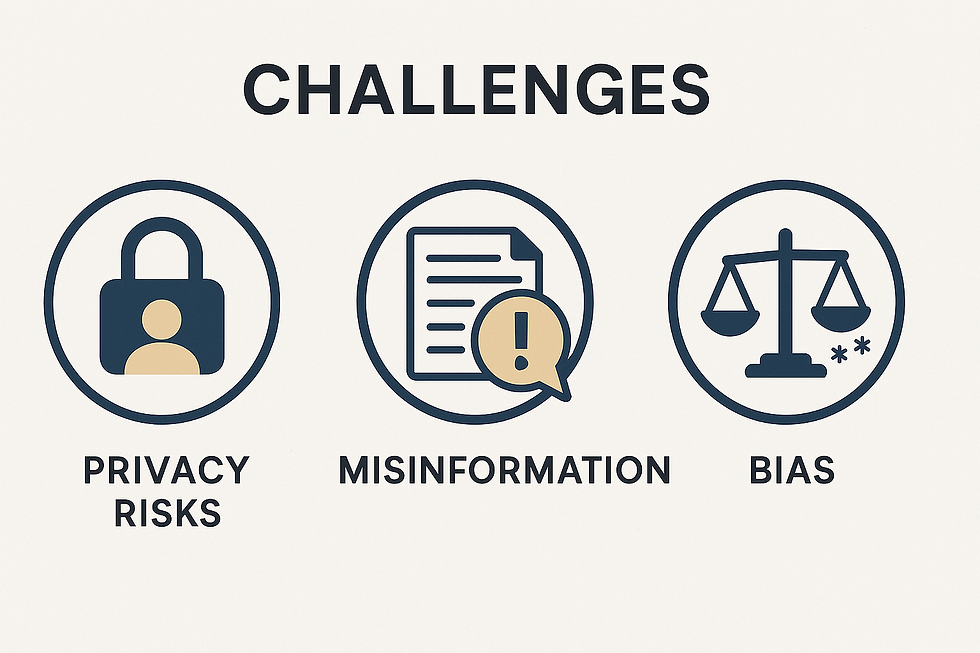
While LLMs offer significant advantages, they also present notable challenges such as privacy risks, data biases, and misinformation. Businesses must proactively develop robust ethical frameworks and clear regulatory guidelines to responsibly manage these issues.
Preparing for the Future
Successful adoption of LLM technologies requires ongoing investment in education, ethical standards, and interdisciplinary collaboration between AI experts, management, and employees. Businesses must balance innovation with caution, ensuring responsible and sustainable integration of AI.

Conclusion
Large Language Models represent a transformative technological advancement reshaping multiple business domains. Companies embracing these changes proactively and responsibly will position themselves as leaders in an increasingly AI-driven world.


Good work!!
This was an insightful read! AI is truly reshaping busimesses. 🚀
it was an great experience..... great team work.......the unity shows how much hard work is performed by each team member...🖱️
Depth is pleasing to read!
great!!